How to restore the entitlement for a home if access to the archives is lost
Maria* sought legal assistance from STEP NGO after discovering that information about her ownership of a house located in occupied territory was missing from the State Register of Rights to Immovable Property. She had all the necessary paper ownership documents, issued before 2013, when real estate registration was carried out by the Bureau of Technical Inventory (BTI) and records were kept only in paper archives. These records were not automatically transferred to the modern electronic register.
We previously explained why it is important to verify whether property rights have been registered in the State Register of Rights to Immovable Property in our information article, available via this link.
At first glance, it seemed that submitting the existing documents would be enough. However, the situation proved to be more complicated. To enter the ownership information into the Register, confirmation from the BTI was required. Since the archives remained in occupied territory, obtaining this information was impossible. As a result, Maria was refused registration of her ownership rights. The situation was further complicated by inconsistent court practice across different regions of Ukraine. In some cases, applicants succeeded, while in others they were refused. For Maria, this meant uncertainty and repeated obstacles.
Together with STEP NGO lawyer Danylo, Maria had to go through every possible stage and type of court proceedings, receiving several refusals along the way. The reason was the courts' approach: one after another, they dismissed the claims, considering the chosen legal remedy to be inappropriate. The lawyer reassessed the case and proposed a different legal strategy. It was decided to bring the case before the administrative courts. The legal argument was straightforward: the lack of access to the BTI archives cannot deprive a person of the right to confirm ownership if they possess all the necessary supporting documents. Ultimately, the case reached the highest court. The court upheld this position, declared the registrar's refusal unlawful, and ordered the registrar to enter the ownership information into the State Register of Rights to Immovable Property.
Thanks to this decision, Maria was able to officially confirm her ownership of the house. This, in turn, enabled her to submit a claim to the Register of Damage for Ukraine.
If you need legal advice or assistance in situations where your home has been damaged or destroyed and you are unable to register your ownership rights in the State Register of Rights to Immovable Property because you cannot access BTI archives, you can book an online consultation with a lawyer via this link.
* The name has been changed to protect personal data.
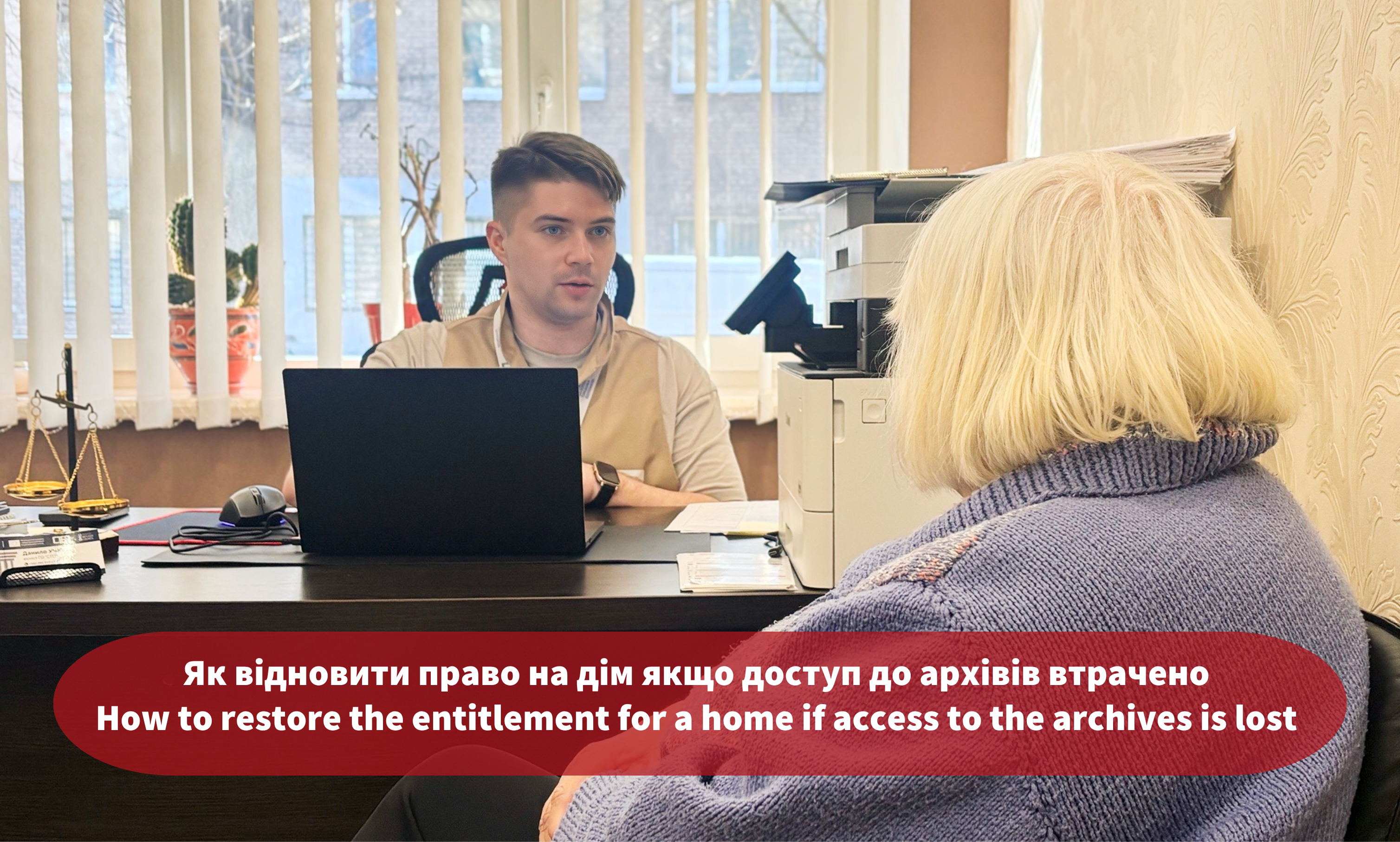
** The image is for illustrative purposes only and does not depict the actual events described in this story.
Assistance is provided by STEP NGO in cooperation with the Danish Refugee Council (DRC) with financial support from the European Union.