Travel restrictions. What should you check before travelling with a child?
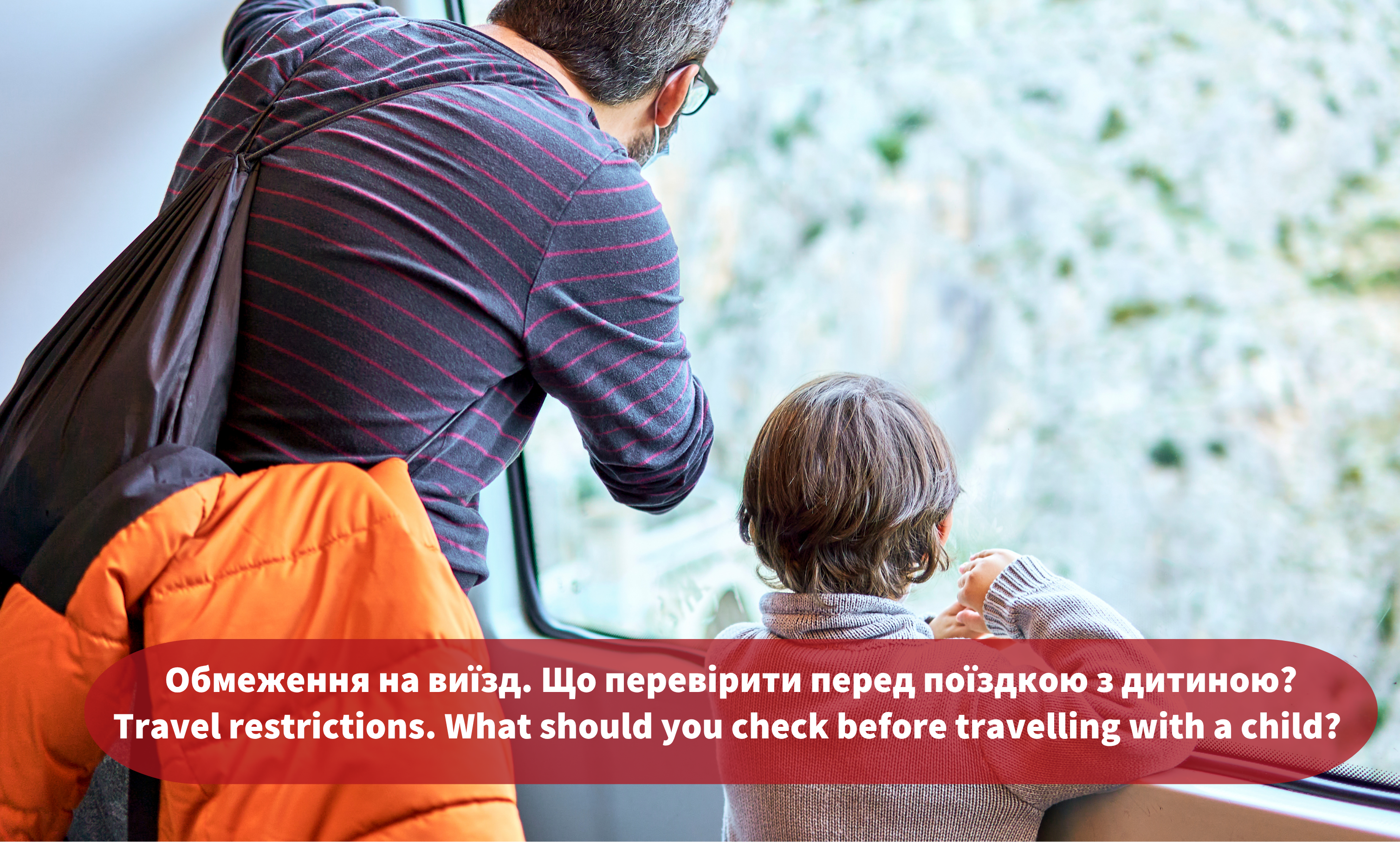
School holidays are a period when requests regarding children's travel abroad for recreation or education significantly increase. Adults usually pay close attention to preparing the child's documents, but less often check whether there are any restrictions affecting their own departure from Ukraine. We have previously covered this topic in the article "Legal aspects of protecting children when crossing the Ukrainian border", where we discussed the required documents, the consent of the other parent, travel accompanied by relatives, and other basic rules. However, practice shows that even when a child's documents are in order, problems may arise due to restrictions affecting the accompanying adult. This may result in lost time, financial losses, or even cancellation of the trip, as the final decision on crossing the border is made during border control.
Why you may be refused permission to cross the border
In its recent guidance, the State Border Guard Service of Ukraine (SBGS) clarified the most common risks associated with crossing the border. These primarily concern temporary travel restrictions imposed by a court or an enforcement authority, including those related to alimony, fines, or other outstanding debts. These restrictions are the subject of the new electronic service launched by the SBGS in May 2026.
Another common reason for refusal is the absence of the required documents or inconsistencies between the documents presented and the specific travel arrangement chosen by the family. For example, under the general procedure, a child under the age of 16 travelling with persons authorised by both parents must have the notarised consent of both parents. In situations where the child travels based on the notarised consent of only one parent or on documents replacing such consent, the border authorities may also verify other circumstances related to family disputes.
Another legally significant ground for refusal is expressly provided by the Border Crossing Rules. If the parent intending to travel with the child, or the parent who authorised another person to accompany the child, is found in the register of debtors under court decisions concerning the establishment of contact with the child or the removal of obstacles to such contact, an authorised officer of the SBGS must refuse permission to cross the state border. In such cases, the person must receive a written, reasoned decision explaining the grounds for refusal.
Another practical issue involves documents that do not allow the authorities to clearly identify the child or verify the legal grounds for travel. The SBGS has specifically clarified that laminating a birth certificate is not in itself a ground for refusing border crossing. However, if the condition of the document makes it impossible to verify its contents or establish the necessary information, difficulties may arise during border control.
What the new SBGS service has changed
In May 2026, the SBGS launched the Personal Account service, allowing individuals to check such restrictions online.
Registration is available using an electronic signature, a Qualified Electronic Signature (QES), Diia.Signature, or BankID.
After logging in, the system automatically checks the user's information against the SBGS databases and displays one of the following results:
- "No restrictions."
- "Temporary restriction exists."
Important! Restrictions related to martial law (including those arising from the border crossing rules established by resolutions of the Cabinet of Ministers of Ukraine) are not displayed in the Personal Account. The service does not guarantee permission to cross the border; it only allows users to check certain potential risks in advance.
What to check before travelling
A practical checklist before departure is quite straightforward:
1) Check that the child has all the required documents (read more in our previous article available via the link).
2) Determine under which travel arrangement the child will leave Ukraine: accompanied by one parent, a relative, or another authorised person.
3) Separately verify whether the accompanying adult is subject to any temporary travel restrictions by using the Personal Account service.
If any restrictions are identified that may prevent crossing the border, we recommend seeking a free legal consultation from the lawyers of the PravoVsim platform.