Raising Children in Conditions of Forced Displacement: The Stories of Young Mothers from the Donetsk Region
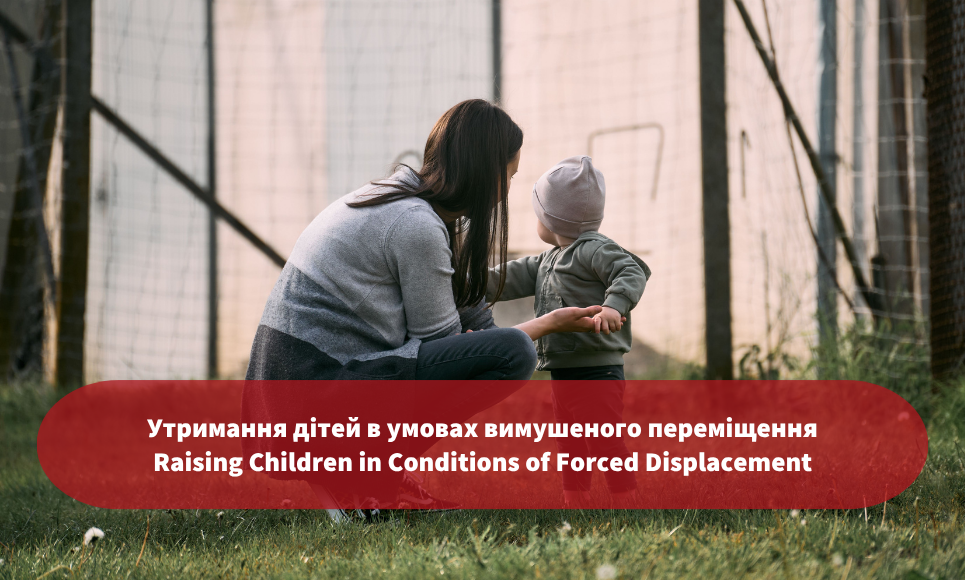
Sometimes, very different and unfamiliar people are brought together by shared difficulties. That’s what happened to Ms. Natalia from Druzhkivka and Ms. Oksana from Bakhmut. Both lived in the Donetsk region, started families, and had children. Because of the war, they were forced to leave their homes and start over from scratch in Dnipro.
Many internally displaced persons (IDPs) are familiar with these new challenges: finding housing and a job, securing legal status and benefits, and enrolling children in preschool or school. But for these mothers, the situation was further complicated by one additional factor - they were left without financial support from the children’s fathers.
All expenses - food, clothing, medical care, education, and leisure activities - fell solely on them. At the same time, both women believed they would be unable to collect child support. The reasons were typical: a lack of funds for lawyers and court costs, and the conviction that it was impossible given the father’s unofficial income. Free legal services provided by the “Caritas Mariupol” Charitable Foundation helped.
Olesya, a lawyer, explained how to proceed and what the court considers in such cases. Specifically:
- child support can be determined not only as a percentage of income but also as a fixed monetary amount (i.e., a set monthly sum - which is convenient when income is unstable);
- the person filing for child support is exempt from paying court fees;
- it is important to prepare the court petition correctly - they also provided free assistance with this.
As a result, both women received court rulings: one after three months, the other after five.
It’s important to know that child support is calculated from the date the petition is filed with the court, not from the date of the ruling. Additionally, the duration of the proceedings is influenced not only by the court’s caseload but also by the defendant’s conduct.
These stories show that even under difficult circumstances, it is possible to defend a child’s right to adequate financial support. And you don’t have to go through this alone - free legal aid can provide crucial support.
Access to free legal aid in Dnipropetrovsk region became possible thanks to the partnership between the Charitable organisation "Caritas Mariupol " and the Danish Refugee Council, with funding provided by the European Union.