Compensation for destroyed housing: can a new owner receive сompensation?
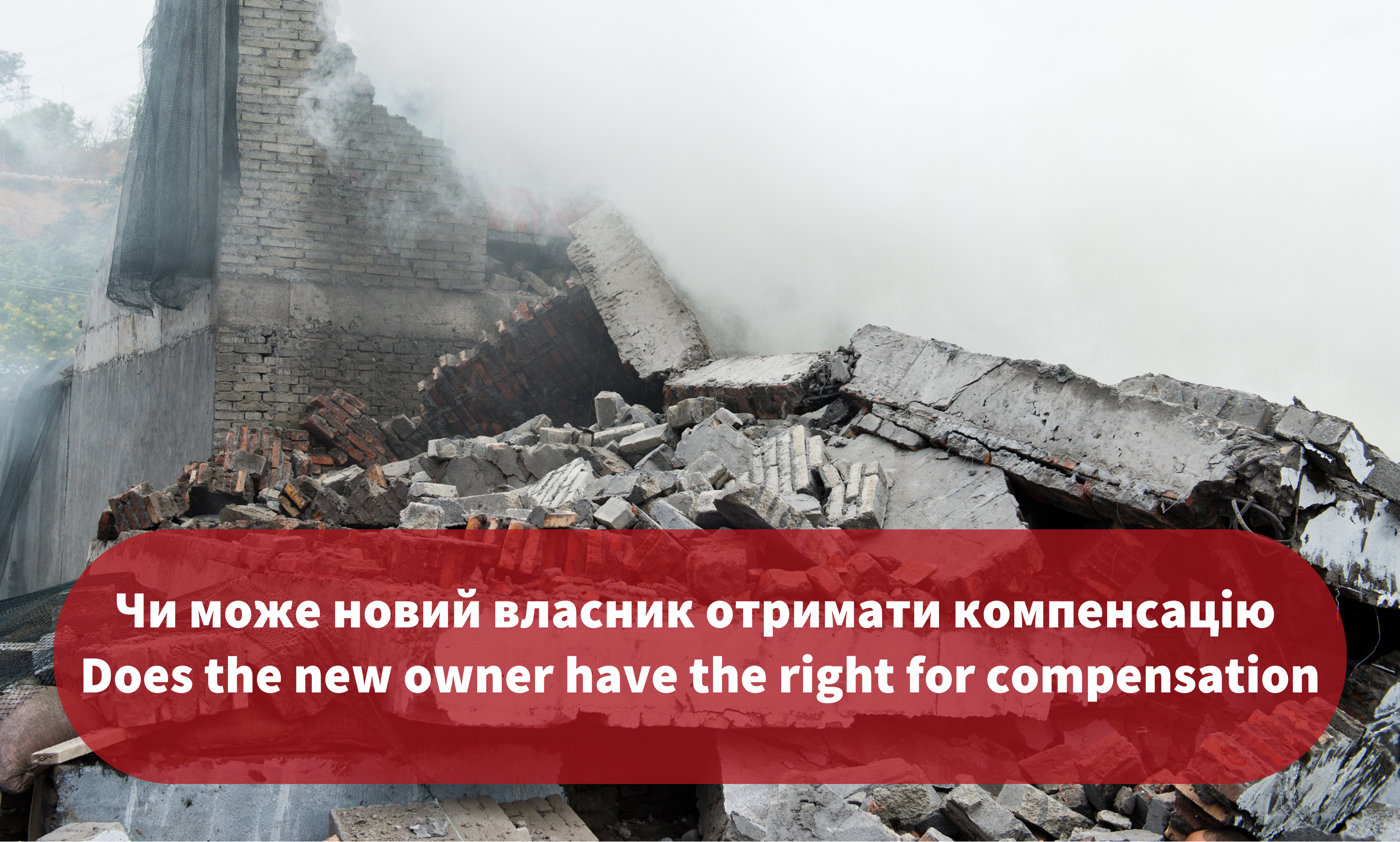
People often contact the lawyers of the PravoVsim platform with the question: “Does a person who bought or received as a gift a home destroyed during the war have the right to compensation?”
Such situations arise when owners cannot independently benefit from the “eRecovery” program — for example, because they lost their documents or do not have an identification code. Some try to transfer the destroyed apartment or house to relatives or acquaintances through a gift or sale agreement. But does this give the new owner the right to compensation?
What the law says
The procedure for providing compensation is established by Law No. 2923-IX “On Compensation for Damage and Destruction of Certain Categories of Real Estate Objects” and Cabinet of Ministers Resolution No. 600 of May 30, 2023.
Ukrainian citizens who can receive compensation include:
- owners of destroyed or damaged housing;
- developers (customers of construction);
- owners of property rights to unfinished construction;
- investors in housing;
- members of housing cooperatives who have paid for but not yet formalized ownership;
- heirs of such persons.
The law provides for only one case in which the right to compensation may pass to another person — through inheritance. That is, if the owner of housing destroyed during the war has died, their heirs may apply for compensation in their stead.
No other legal means of transferring this right — whether through gift, sale, or any other civil agreement — are provided by law.
Who has the right to compensation?
According to Article 41 of the Constitution of Ukraine, no one may be unlawfully deprived of the right to property. The right to private ownership is inviolable.
Article 22 of the Civil Code of Ukraine establishes that a person whose civil right (in this case, the right of ownership) has been violated and who has suffered losses as a result, is entitled to compensation for those losses.
This approach is consistent with criminal law, which defines a victim as a natural person who has suffered moral, physical, or property damage as a result of a criminal offense.
Thus, the legislator directly links the right to compensation with the person who has directly suffered material damage, making this right personalized — essentially associating the right to compensation with the person who owned the property at the moment the damage occurred (destruction or impairment).
By contrast, the sale or donation of destroyed real estate constitutes a new civil transaction made after the moment of damage or destruction. In such a case, the buyer acquires the object in its existing state — already destroyed or uninhabitable.
Therefore, this person did not suffer any losses as a result of the damage and therefore cannot be considered a victim in the context of compensation legislation.
Key points to remember
- If you bought or received as a gift destroyed or damaged housing after the destruction, you do not have the right to compensation.
- If you inherited such property, you do have the right to compensation, as it transfers together with the inheritance.
- If you sell or donate a share in destroyed or damaged housing, the new owner will not be able to receive compensation, even if you submitted an application before the sale.
- If you owned the housing at the time of destruction but lost your documents, you still have the right to compensation — the main thing is to confirm ownership.
Therefore, only the person who owned the housing at the time it was damaged or destroyed, or their heirs, can receive compensation. Any other form of transferring ownership does not grant the right to state reimbursement.
If you are considering entering into any transaction involving damaged or destroyed housing, be sure to consult a PravoVsim lawyer [via this link]. This will help you avoid misunderstandings and unjustified expectations regarding state compensation.
This informational material was created within the framework of a project implemented by the Danish Refugee Council (DRC) and funded by the European Union’s Civil Protection and Humanitarian Aid Operations. The views and opinions expressed are those of the author and do not necessarily reflect the views of the European Union or the DRC. Neither the European Commission nor the DRC can be held responsible for the content of this material.
Comments (0)
Author