Changes in access to psychological services in Ukraine
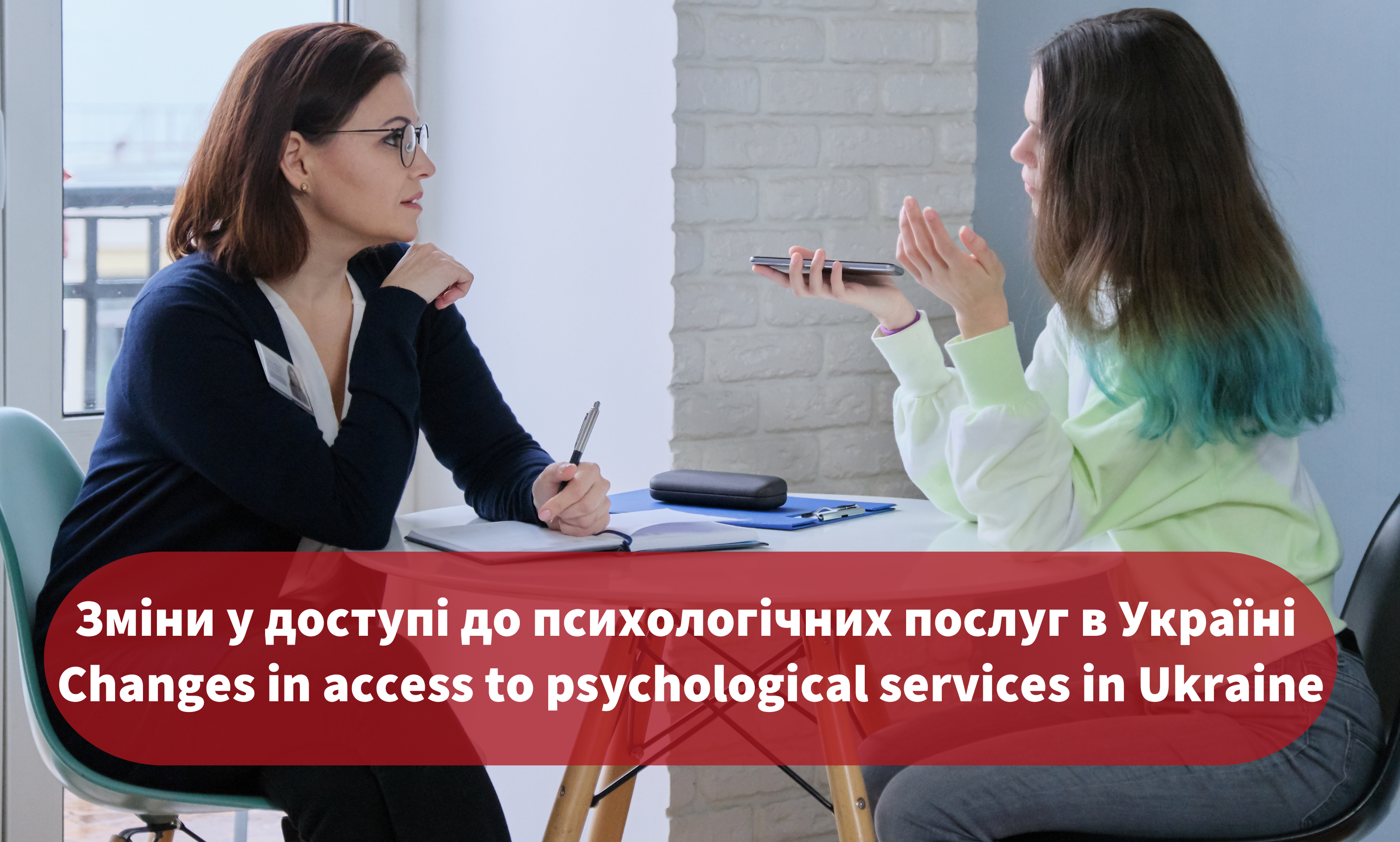
In December 2025, the Government of Ukraine adopted new rules for providing mental health services. The key change is that psychological, psychotherapeutic, and psychosocial support can now be provided not only in person, but also remotely using modern technologies such as video communication, online platforms, mobile applications, and chatbots. This is not only a technical innovation. It is an important step toward removing barriers to access to essential social services for millions of Ukrainians who live far from cities, have limited mobility, or need urgent support.
Main provisions
1) The Procedure applies to all actors involved in the mental health sector:
- service providers;
- specialists (psychologists, psychotherapists, psychosocial support workers);
- service recipients.
2) The Procedure clearly distinguishes between two formats of service delivery:
- Synchronous mode – support provided in real time (for example, video or audio consultations);
- Asynchronous mode – communication with a time delay (electronic messages, feedback forms, etc.).
3) The Procedure sets mandatory conditions, including:
- compliance with personal data protection laws;
- safety and confidentiality standards for communication;
- use of technical tools that ensure high-quality connection;
- informing recipients about the content and potential risks of digital services.
Important! The National Commission on Mental Health may establish additional requirements for technical standards and security of digital tools used to provide services. It may also define minimum quality standards, reporting forms, and conduct analytical monitoring of service development. The results are included in the annual report and used to improve the mental health care system.
4) Types of services that may be provided
- Psychosocial services;
- Psychological counselling;
- Psychotherapy;
- Psychological rehabilitation;
- Other related support services.
Important! These services may be fully remote or provided in a combined format (remote sessions plus in-person meetings).
5) Mechanisms for providing services
- psychological counselling by telephone, including psychological support hotlines (within psychosocial and psychological services);
- individual or group counselling via video or audio communication (within psychosocial and psychological services)
- psychotherapy, psychological support (within psychosocial, psychological, and rehabilitation services), and supervision using information and communication technologies;
- use of digital tools (mobile apps, chatbots, web platforms, online communities) for psychological education (psychoeducation), emotional support, self-assessment of mental health, or referral to specialists and service providers;
- use of virtual, augmented, or mixed reality technologies during psychoeducation, psychotherapy, and psychological rehabilitation under professional supervision;
- other possible methods.
6) Safeguards
- refusal or termination of online services if there is a threat to life or serious deterioration of the recipient’s condition;
- referral to in-person services or to another specialist;
- immediate information about risks and alternative support options.
Important! Specialists and other staff members who identify a service recipient in an emergency condition must provide the necessary emergency medical assistance.
The adoption of this Procedure is a logical step in the development of the mental health system. Online services, which were previously considered optional, are now officially recognized and regulated by the state as a form of psychological support. This change ensures legal guarantees, ethical standards, and technical safety. It is not only digital modernization. It is real progress toward a system where every person can receive support when they need it most.
This informational material was created within a project implemented by the Danish Refugee Council (DRC) with financial support from the Government of the United States of America. The views and opinions expressed are those of the author(s) only and do not necessarily reflect the views of the Government of the United States of America or DRC. Neither the Government of the United States of America nor DRC can be held responsible for the content of this material.