Ukraine updates its approach to the employment of people with disabilities
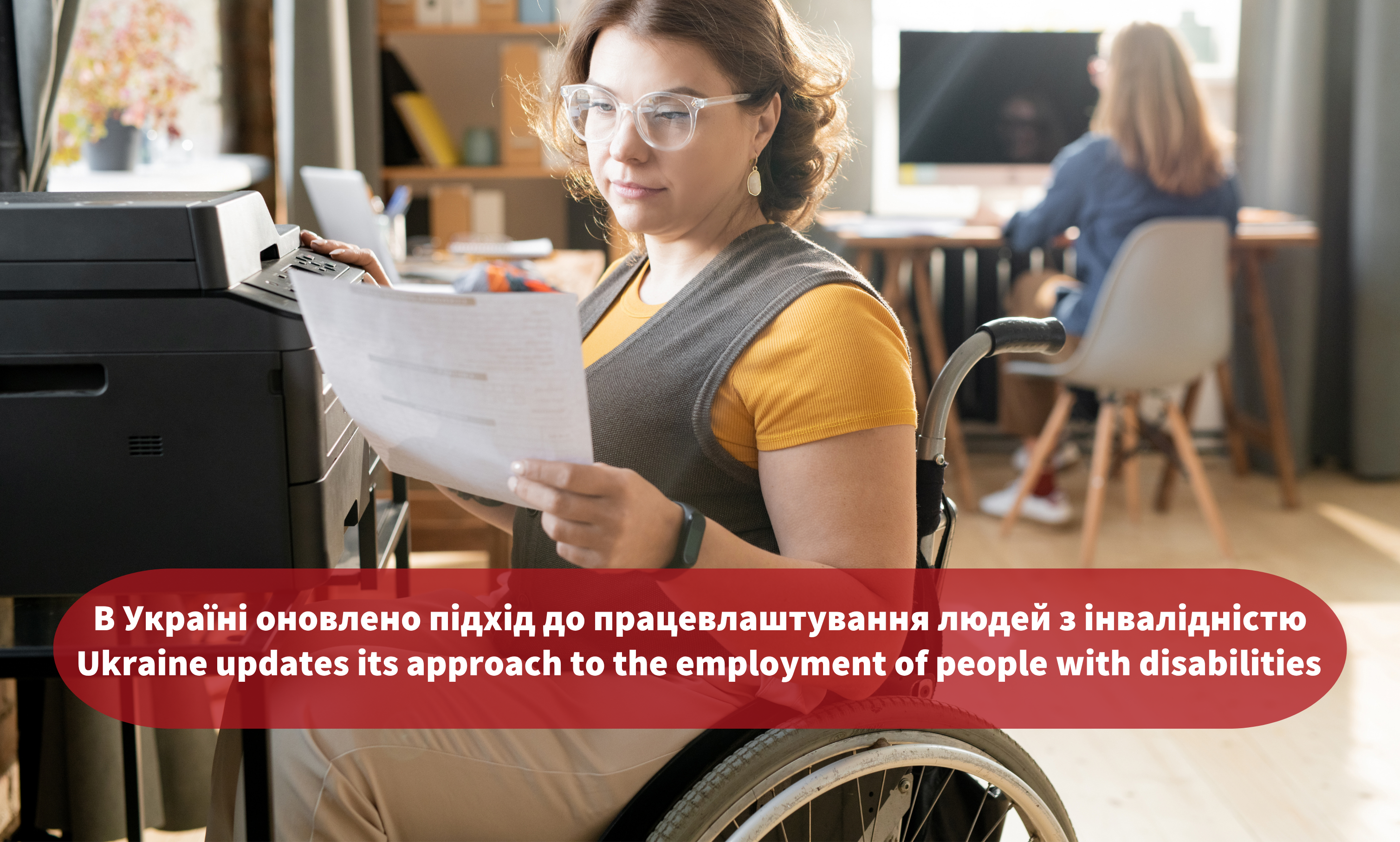
In Ukraine, the issue of employment for people with disabilities is becoming increasingly important in light of the social consequences of the war. The outdated approach to calculating employment quotas for people with disabilities often led to shadow employment practices or fictitious labour relations aimed at avoiding financial penalties. Importantly, in April 2026, these rules became more flexible and more favourable for all parties involved in labour relations.
How the system worked before
To encourage employers to create jobs for people with disabilities, the state established specific quotas:
- if a company employed from 8 to 25 workers — at least one workplace had to be designated for a people with a disability;
- if a company employed more than 25 workers — people with disabilities had to make up at least 4% of the average number of full-time employees.
Although this rule has existed for many years, its primary goal — the integration of people with disabilities into the labour market — often remained unattained. Businesses frequently perceived these requirements as a formality rather than a genuine integration mechanism. In some cases, this led to abuses: people were formally employed “on paper” without actual involvement in work.
New rules from 2026
In April 2026, the rules were updated to encourage employers to create not merely formal positions, but genuinely inclusive and fully functional workplaces for people with disabilities.
The key innovation is the so-called “double counting” mechanism. Under the new rules, one employee may count as two positions within the quota if they belong to one of the following categories:
- people with Group I disability;
- people with Group II disability related to visual impairment (according to the approved list of conditions);
- people with Group II disability related to mental health disorders (also according to the established list).
However, this does not apply automatically — several conditions must be met:
- the employee must be officially employed (through an employment contract, service arrangement, contract, or paid internship);
- the salary must exceed the minimum wage, even if the person works reduced hours due to adapted working conditions;
- the work must not endanger the employee’s health and must comply with medical recommendations, including mental health considerations where relevant to the position.
Which workplaces are no longer counted
The government also clarified which workplaces are excluded when calculating the quota.
This concerns positions classified as having harmful (Class III) or hazardous (Class IV) working conditions. Employees in such positions are no longer included in the total number of staff used to calculate the quota.
This is particularly important for businesses operating in sectors where it is objectively difficult to ensure safe employment conditions for persons with disabilities — for example, mining, metallurgy, or the chemical industry.
The updated approach reduces the formal nature of the requirements and allows employers to focus on the main objective — creating genuinely safe and accessible workplaces.
Who benefits from the changes
At first glance, the rules may appear more complicated. However, they are also intended to make the system clearer and less formalistic. Whether these changes will work as intended remains to be seen in practice. At the same time, it is evident that the new approach already takes into account many of the shortcomings of the previous system.
Importantly, the focus has shifted from formal compliance to genuine employment opportunities. This means:
- stable income for people with disabilities;
- better integration into society;
- the development of inclusive workplace culture within companies.
Overall, these changes appear to be an attempt to strike a balance between supporting people with disabilities and providing businesses with more realistic and practical rules.
The updated approach to the employment of people with disabilities demonstrates how the state can simultaneously support both businesses and socially vulnerable groups.
Comments (0)
Author